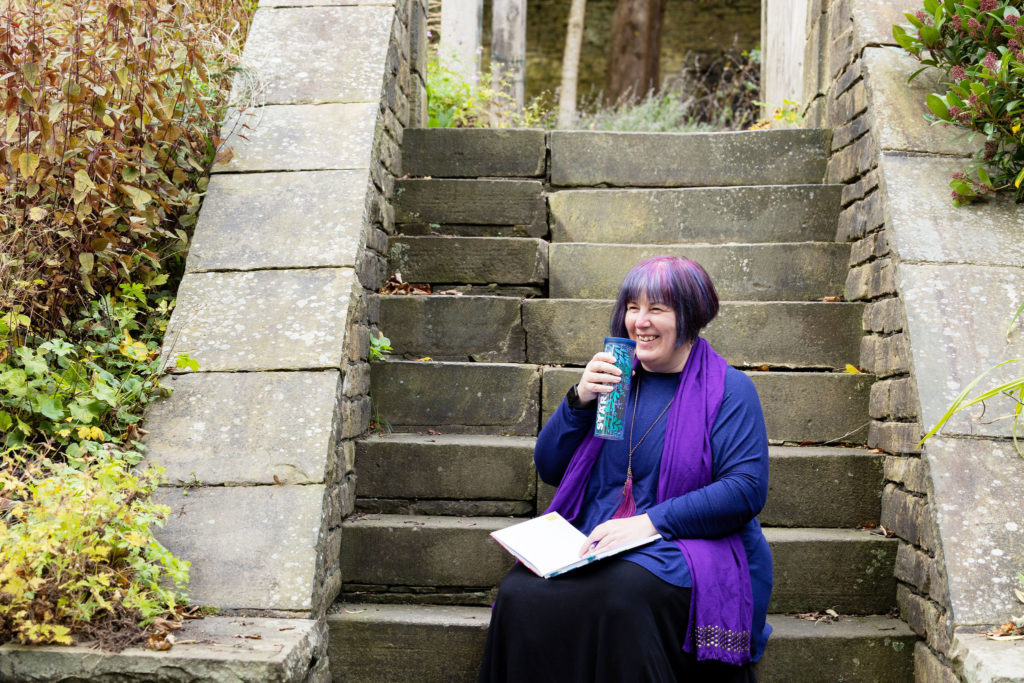
Purplemoon Monthly Musings – August- How Silence Can Restore Wellbeing

Purplemoon Monthly Musing

Posted 27th August 2026

Stop. Breathe. Reflect. How Silence Can Restore Wellbeing

Welcome to Purplemoon Monthly Musings.

On the final Wednesday of every month Jenny will be posting out about a theme that has been appearing in her work, or her life, across all sectors. It could be a topic that particularly resonates with you, or it might be a new concept or idea to you. Either way the aim is to give voice to some thoughts, ponder some questions and explore what this might mean to us as individuals and as a community. Jenny will always aim to credit original sources as she explores the musings title and will welcome your comments and contributions to keep the musing going! This blog is also published on LinkedIn. Follow Jenny here.

Welcome to the August monthly musing, published as most of us in England head back into schools

As summer begins to draw to a close and the new academic year waits just around the corner, many educators will be experiencing familiar feelings. There may be excitement and anticipation, alongside the inevitable planning, preparation and mental to-do lists that accompany a return to school.

For some, the summer break may have felt far too short. For others, it may have provided opportunities to rest, recharge and reconnect with parts of life that often take a back seat during the busy school year.

As I reflect on the months gone by, one thing has become increasingly important to me:

Silence.

Not emptiness. Not loneliness. Not inactivity.

But intentional moments of quiet that allow us to stop, breathe and reconnect with ourselves.

In education, so much of our day is filled with noise. Conversations, questions, meetings, bells, emails, phones, corridors bustling with activity, and the constant responsibility of responding to the needs of others. It is a profession founded on relationships and communication, but that also means periods of true quiet can be surprisingly rare.

Dr Saundra Dalton-Smith, in her work on the seven types of rest, identifies sensory rest as one of the essential forms of restoration. Sensory rest provides relief from the constant stimulation of modern life. It allows our nervous systems an opportunity to settle and recover from the relentless demands placed upon our senses.

As educators, we often think about rest in terms of holidays, evenings or sleep. But sensory rest reminds us that sometimes what we need most is not necessarily more sleep, but less stimulation:

Less input. Less noise. More space.

Over the last six months, I have become much more intentional about creating periods of silence in my own life. Not because I wanted to achieve anything in particular, but because I recognised a growing need to turn my attention inwards rather than constantly outwards.

What I discovered surprised me: Those quieter moments became deeply restorative, helping me to replenish energy that I didn’t fully realise had been depleted. They also did something else. They created space for creativity.

Without the constant stream of information, opinions, notifications and distractions, small sparks of new ideas began to emerge. Thoughts were able to develop. Reflections became clearer. Solutions that had previously felt elusive seemed to arrive more naturally. It reminded me that creativity doesn’t always arrive through doing more. Sometimes it arrives when we finally become still enough to hear it.

As a new academic year begins, I find myself wanting to hold on to this lesson. Not just for weekends and holidays, but during the working week itself. Because while silence can feel like a luxury in education, it is often available in the smallest moments if we choose to notice it.

The minute before pupils arrive. The pause between meetings. A walk across the playground. The kettle boiling in the staffroom. The few moments spent looking out of a classroom window before moving on to the next task.

These brief pauses can become opportunities to practise something I often return to:

Stop. Breathe. Reflect.

Stop what you’re doing.

Take a slow breath in.

Take an even slower breath out.

Reflect on how you’re feeling in that moment.

Not how you think you should be feeling. Not what needs to happen next. Simply noticing where you are right now.

Our breath has an extraordinary ability to anchor us in the present moment. It brings our attention back from the worries of tomorrow and the regrets of yesterday. It reminds us that we are here, now.

I am often reminded of the beautiful lyric from Alexi Murdoch’s song Breathe:

“Don’t forget to breathe.”

Such simple words, yet how often do we do exactly that? Not literally forgetting, of course, but breathing so shallowly and rushing so quickly through our days that we lose touch with the calming rhythm that is always available to us.

Sometimes the most important thing we can do is pause long enough to remember.

Don’t forget to breathe.

Silence also has a role to play beyond our working days. Weekends, holidays and those precious periods of downtime offer longer opportunities to lean into quietness and sensory rest.

This doesn’t necessarily mean sitting in complete stillness or striving for some idealised version of mindfulness. Silence can simply be an inward shift of attention. It can be choosing activities that nourish rather than stimulate.

These could be: Curling up on the sofa with a book. Sitting quietly in the garden, noticing new growth and the subtle changing of the seasons. Watching the light shift across a room. Listening to birdsong. Enjoying a cup of tea without simultaneously checking emails or scrolling through social media.

These moments may seem small, but they create space. Space to think. Space to feel. Space to hear our own thoughts again.

In a profession where we spend so much of our time focused on the needs of others, silence offers us an opportunity to reconnect with ourselves. It provides the sensory rest that Dr Dalton-Smith describes so powerfully and reminds us that wellbeing is not always found in doing more.

Sometimes wellbeing is found in creating enough quiet to restore our energy, spark our creativity and hear our own voice again.

As summer gives way to autumn and the rhythm of the school year begins once more, perhaps we might all experiment with noticing the silence a little more.

Seeking it out in the gaps between commitments.

Protecting it during weekends and holidays.

Allowing ourselves moments to stop, breathe and reflect.

Because sometimes the most valuable thing we can do is pause long enough to listen.

Purplemoon Monthly Musings – July- Holding the Line with Kindness

Purplemoon Monthly Musing

Posted 23rd July 2026

Holding The Line With Kindness

Welcome to Purplemoon Monthly Musings.

On the final Wednesday of every month Jenny will be posting out about a theme that has been appearing in her work, or her life, across all sectors. It could be a topic that particularly resonates with you, or it might be a new concept or idea to you. Either way the aim is to give voice to some thoughts, ponder some questions and explore what this might mean to us as individuals and as a community. Jenny will always aim to credit original sources as she explores the musings title and will welcome your comments and contributions to keep the musing going! This blog is also published on LinkedIn. Follow Jenny here.

Welcome to the July monthly musing, published as most of us in England head into the summer holidays

As we move into the summer holiday season here in the UK, I’ve found myself reflecting on something that has been a constant theme in the supervision spaces I’ve been holding this year.

Sometimes it has appeared directly in our conversations. Sometimes it has sat just beneath the surface. But time and again, it seems to come back to the same question:

How do we keep healthy boundaries, particularly when living our values and helping others matters so deeply to us?

As I’ve listened to these conversations, I’ve been reminded that many of us don’t struggle with boundaries because we don’t care. Quite the opposite. We care deeply. We are committed to making a difference. We want to support others well. Yet sometimes those very strengths can make it harder to recognise when our own needs have moved to the bottom of the list.

These conversations have also encouraged me to reflect on my own boundaries. What I’ve realised is that not all boundaries need to be held in the same way. Some of mine are what I think of as soft boundaries. They have a little movement in them. They allow for flexibility and judgement. They can bend when circumstances genuinely call for it. These boundaries recognise that life is messy and that rigidity isn’t always helpful.

Then there are my hard boundaries.

These are the ones that protect my wellbeing and sustainability. They are the boundaries I do my best to maintain because experience has taught me what happens when I don’t.

In fact, as I was writing this, I realised that I haven’t written a Purplemoon Monthly Musing since March. A few years ago, I might have viewed that as something I needed to apologise for or explain away. Instead, I’m noticing my response is different. The last few months have required me to focus my time and energy elsewhere, and maintaining my boundaries has been part of that. Whilst I have missed writing these reflections, I’m also at peace with the choice. Sometimes honouring our boundaries means accepting that not everything can happen at once, even the things we enjoy and value.

One of those hard boundaries is not working at weekends.

It’s not because there isn’t work that could be done. There almost always is. Sometimes I find myself thinking, “If I just spend an hour or two catching up now, next week will feel easier.”

Occasionally, that might even be true.

But I have learned that there will always be another task, another email, another project that could persuade me to sacrifice a little rest today for the promise of an easier tomorrow. The problem is that tomorrow never quite arrives in the way we imagine it will.

What does arrive is Monday, and a quiet expectation that I can continue giving from a well that I’ve not allowed myself time to refill.

Keeping boundaries is rarely about convenience. If they were easy to keep, they probably wouldn’t need to be boundaries at all.

There are times when holding a boundary feels uncomfortable. We worry about letting people down. We feel guilty. We question ourselves. We wonder whether we are being selfish.

This is where I’ve been learning the importance of a compassionate inner voice.

That voice reminds me that a boundary is not a rejection. It is not a sign that I don’t care.

Quite the opposite.

A healthy boundary acknowledges that my needs matter too. It recognises that being consistently available is not the same as being consistently effective. It understands that rest is not a reward for finishing everything; it’s a necessity for being able to continue.

When my inner critic tells me that I should do more, stay later, answer one more message or give up a weekend, I am trying to meet that voice with kindness rather than criticism.

I remind myself that sustainable helping requires sustainable habits.

The people I support deserve the best version of me, not the most exhausted one.

Perhaps that is the invitation this month.

As summer unfolds and perhaps offers a little more space for rest and reflection, consider your own boundaries. Which are your soft boundaries; those that can flex when needed? Which are your hard boundaries; the ones that protect what matters most?

And when those boundaries feel difficult to maintain, can you speak to yourself with the same compassion that you would offer to someone else?

Because boundaries are not barriers to caring.

Sometimes they are the very thing that allows us to keep caring, for the long term.

As always, I hope you find moments this summer to pause, breathe and be gentle with yourself. The work we do matters. So do we.

Purplemoon Monthly Musings – March- Educator Wellbeing: How Quiet Satisfaction Supports Sustainable Practice

Purplemoon Monthly Musing

Posted 31st March 2026

How Quiet Satisfaction Supports Sustainable Practice

Welcome to Purplemoon Monthly Musings.

On the final Wednesday of every month Jenny will be posting out about a theme that has been appearing in her work, or her life, across all sectors. It could be a topic that particularly resonates with you, or it might be a new concept or idea to you. Either way the aim is to give voice to some thoughts, ponder some questions and explore what this might mean to us as individuals and as a community. Jenny will always aim to credit original sources as she explores the musings title and will welcome your comments and contributions to keep the musing going! This blog is also published on LinkedIn. Follow Jenny here.

Welcome to the March monthly musing, published on a Tuesday as we head into Easter holidays!


There’s a particular kind of moment that I really enjoy exploring in the supervision space.
It isn’t dazzling. It isn’t loud. It doesn’t ask to be celebrated.

It’s that quiet exhale; the subtle sense of I did something meaningful today.
Not perfect. Not extraordinary. Just quietly, deeply satisfying.

As educators in the UK, our working lives are filled with the idea of endless improvement: constant noise, moving on to the next thing, and focusing on the “even better ifs…”.

Then, when we’re asked to share something great,  a moment of joy, we are quite often brought to a sudden stop.
The default position is: “A what?”

Sometimes I see almost a flicker of panic in my supervisees’ faces as they try to pull a big, celebratory, major step forward from their memory banks.


However, when I ask them to tell me something that has brought them quiet satisfaction, a sense of a job well done, the shift is remarkable. Quite often I see deep thinking, shoulders dropping, a small smile… and then they share something.

This may be a quieter emotion, often overlooked, yet when brought into the space it can be deeply telling of where the supervisee is right now in their professional persona. And when encouraged to reflect on it daily, it can be profoundly sustaining for wellbeing, because it offers a grounded, stable moment of alignment between your effort and your purpose.

So, what could be a moment of quiet satisfaction?

Perhaps when:

  • You’ve had a calm, respectful conversation with a learner who usually finds connection difficult.
  • A parent leaves a meeting feeling heard rather than hurried.
  • A respectful conversation has occurred where everyone agrees clear next steps that will benefit all parties.
  • You finally complete that piece of paperwork that’s been silently sitting on your desk, accusingly, for weeks.
  • You notice a pupil mastering a skill not because of a grand intervention, but because of steady, intentional nudges from caring adults.
  • You end the day knowing you stayed true to your values, even when the system around you felt rushed.
  • You see a colleague putting a process in place that you have encouraged, and you see that they can see it has worked.

For leaders, these moments can be the most powerful of all. Joy can be fleeting, reactive, momentary. But quiet satisfaction often holds something deeper: continuity. A sense of slow, steady impact that accumulates over time. A sense that something is being embedded into culture and expectation, and therefore making a difference.

For leaders, it is also how we can recognise the impact we are having on learners and on the community. When we see others excelling, when systems we have built are working, there is a profound sense of purpose.

In emotionally demanding roles, this kind of satisfaction can be more nourishing than joy because:

  • It doesn’t require external validation.
  • It isn’t dependent on others responding in a particular way.
  • It anchors you, rather than lifting you into a high that may not last.
  • It reconnects you to the “why” behind the “what”.

This is not me saying “ignore the joy.” Quite the opposite. When I’m in a session and we explore what has brought quiet satisfaction to someone’s week or month, what usually follows is the declaration of a moment of joy.

Joy gives us a real hit of good hormones, and reliving that moment, sharing it with others, even “shouting it from the rooftops,’’ supports belonging, positive culture, and shifts in mindset. But joy is not always long-term or sustaining, and on a tough day or week it can be hard to spot.

Quiet satisfaction, however, is almost always there. Every day, there is something to be proud of or satisfied of, even if it is simply: “I stuck to my values,” or “I held that boundary.”

It is vital that alongside celebrating the moments of joy and feeling that big high, we also recognise the subtle, steady satisfaction that can sustain us through the academic year.

Quiet satisfaction is wisdom’s joy.
It’s the moment your soul nods and says, Yes, this mattered.

Your work is full of these small, powerful moments. Make sure you notice, and feel them.

Purplemoon Monthly Musings – January-Getting to the heart of it, Part Three-The Nolan Principles and the Inadvertent Harm They Can Cause

Purplemoon Monthly Musing

Posted 28th January 2026

Getting to the Heart of It-Part 3-The Nolan Principles and the Inadvertent Harm They Can Cause- a Purplemoon Monthly Musing

Welcome to Purplemoon Monthly Musings.

On the final Wednesday of every month Jenny will be posting out about a theme that has been appearing in her work, or her life, across all sectors. It could be a topic that particularly resonates with you, or it might be a new concept or idea to you. Either way the aim is to give voice to some thoughts, ponder some questions and explore what this might mean to us as individuals and as a community. Jenny will always aim to credit original sources as she explores the musings title and will welcome your comments and contributions to keep the musing going! This blog is also published on LinkedIn. Follow Jenny here.

Welcome to the January monthly musing, the first of 2026, and the final instalment of the trilogy ‘Getting to the Heart of It’.

For those in education in the UK, and in other public sector roles, the influence of The Seven Principles of Public Life—the Nolan Principles—may not always be obvious. Yet they are the ethical foundation behind the Teachers’ Standards and underpin the Headteacher Standards that shape the expectations placed upon every teacher and leader. These seven principles are:

  • Selflessness
  • Integrity
  • Objectivity Accountability
  • Openness
  • Honesty
  • Leadership

On the surface, they appear reasonable, even admirable. But when they are translated into the Teachers’ Standards, their impact becomes more complex. The preamble states: 

Teachers make the education of their pupils their first concern and are accountable for achieving the highest possible standards in work and conduct.’

Part Two extends this further, requiring teachers to demonstrate consistently high standards

‘within and outside school.’

The implication is clear: once you become a teacher, your private and public conduct are held to the same uncompromising standards, you cannot be fallible, human.


This raises important questions. Where do these standards begin and end? To what extent are teachers responsible for navigating systemic, organisational or societal failings? What does selflessness mean when placed beside the very real need for self-care? Where does accountability for a student’s learning, behaviour and attitude start—and where should it reasonably finish?

This environment is the soil from which high‑stakes accountability has grown. How much do we take upon ourselves, when it is not our error or mistake to bear? This plays out in supervision again and again. What does selflessness really look like? In addition, for teachers, challenging poor behaviour or unethical practice from leaders can feel dangerous. The professional cost of speaking up is often high.

In Part Two of this trilogy, I discussed collusion and the importance of recognising, avoiding and managing it. But collusion does not only exist between colleagues or supervisors; supervisees may also be colluding and perpetuating toxicity or poor interpersonal behaviour unknowingly, their ‘norm’ reshaped by organisational culture.

These experiences form the backdrop of many conversations I now have in my supervisory role.

 I also look back and ask myself: how long did I collude? As a mentor and professional tutor, I assessed students and NQTs (now ECTs) against the very standards I am now interrogating. Did I know better? No, but somewhere within me I knew it didn’t quite sit right when taking a humanistic view. My overarching frame was ‘you do the best you can’, and ‘no one is perfect’ – but was it enough?

Teachers who step into leadership roles adopt the Headteacher Standards, which build upon the Teachers’ Standards and extend them further. Among these expectations is the requirement that 

‘Headteachers uphold and demonstrate the Seven Principles of Public Life at all times.’

The Standards also require leaders to behave ethically, fulfil their responsibilities fully, and model the behaviour of a ‘good citizen’. This shifts the expectation from doing the right thing to being the right thing—a significant leap.


There is a cost to this never‑ending selflessness, openness and accountability. We see it in recruitment and retention struggles, in burnout, and in leaders leaving the profession. And to my great sadness, leaving with a feeling that they weren’t ‘good enough’. To supervise effectively, we must recognise how deeply the Nolan Principles permeate the system.

This became clear during a discussion with my cross‑professional peer supervision group. The ethical frameworks for therapists explicitly include self‑care—a requirement notably absent from the teaching framework. The contrast created an ‘aha’ moment for all of us.

In supervision, we must help practitioners explore how ethical frameworks shape their decisions, self-perceptions and boundaries. What does it mean to uphold ethical and professional responsibilities while maintaining one’s own self?

I am not arguing for the removal of the Nolan Principles. Ethical standards matter deeply. But self-care must sit alongside them as an ethical imperative. Without it, selflessness becomes self‑erasure, accountability becomes fear, and leadership becomes unsustainable.

To truly serve pupils, colleagues and communities, teachers and leaders must be allowed to remain human first. Only then can they meet the ethical expectations of their profession with integrity rather than exhaustion.

Purplemoon Monthly Musings – November-Getting to the heart of it, Part Two-Congruence yes, Collusion no

Purplemoon Monthly Musing

Posted 26th November 2025

Getting to the Heart of It-Part 2- Congruence Yes, Collusion No.- a Purplemoon Monthly Musing

Welcome to Purplemoon Monthly Musings.

On the final Wednesday of every month Jenny will be posting out about a theme that has been appearing in her work, or her life, across all sectors. It could be a topic that particularly resonates with you, or it might be a new concept or idea to you. Either way the aim is to give voice to some thoughts, ponder some questions and explore what this might mean to us as individuals and as a community. Jenny will always aim to credit original sources as she explores the musings title and will welcome your comments and contributions to keep the musing going! This blog is also published on LinkedIn. Follow Jenny here.

Welcome to part two of the ‘Getting to the heart of it’ trilogy. Some of you may have noticed that the purplemoon monthly musing inadvertently took a break in October! It wasn’t intentional, it is that I found part two tricky to coalesce.

This is because congruence is difficult at times,  and collusion can really turn up unintentionally when you are deeply relational and humanistic in your supervision, and creating psychological safety is of paramount importance.


What I do know is supervision is one of the most powerful spaces in leadership. It’s where we pause, reflect, and recalibrate. For education leaders, it’s a lifeline, a chance to process complexity and find clarity. To explore and reflect on self as well as others. For supervisors, it’s a responsibility, a commitment to hold space that is safe, honest, growth-oriented with a wellbeing lens. But within this dynamic, a subtle tension often arises: the pull between congruence and collusion.

Congruence is about alignment. It’s when our values, words, and actions harmonise. In supervision, congruence means showing up authentically—whether you’re the one offering guidance or the one receiving it. It’s about integrity: saying what you mean, meaning what you say, and acting in ways that reflect your principles. Congruence builds trust and therefore a psychologically safe space. It creates a foundation where real learning and wellbeing can flourish.

Collusion, on the other hand, is the quiet compromise. It’s the nod of agreement when your gut says, This needs exploring. It’s the temptation to avoid discomfort for the sake of harmony. Collusion can feel like kindness, but it’s not. It’s avoidance dressed up as empathy. And while it may soothe in the short term, it erodes growth in the long term.


So how does this show up in supervision?

For supervisors, the risk of collusion often comes when a supervisee shares something that feels ethically grey or professionally concerning. You might think, I don’t want to damage trust, and choose silence. But trust isn’t built on avoidance—it’s built on honesty delivered with care. Congruence means naming what you notice: I hear your perspective, and I wonder if we can explore the implications together. It’s not about confrontation; it’s about curiosity and courage.

For education leaders, collusion can look like self-protection. You might hold back in supervision because admitting uncertainty feels risky. You might agree with suggestions, ideas or comments you don’t believe in because challenging feels uncomfortable. But supervision is not a performance—it’s a partnership. Congruence means bringing your whole self into the conversation: your doubts, your questions, your convictions. It’s about trusting that growth comes through honesty, not through pretending.

Here’s the truth: congruence is hard. It asks us to be clear about our values and brave enough to live them out. It asks supervisors to balance support with challenge, and supervisees to embrace vulnerability without fear. But when both sides commit to congruence, supervision becomes transformative.

What does this look like in practice?

  • For supervisors:
    • Hold boundaries with compassion. Empathise without excusing.
    • Name what you notice. Sometimes the most supportive act is surfacing what’s unsaid: I sense some tension—shall we explore that?
    • Stay anchored in purpose. Supervision is not about pleasing; it’s about partnering for growth.
  • For supervisees:
    • Bring your authentic self. Share the wins and the worries.
    • Ask for challenge as well as support. Growth rarely happens in comfort zones.
    • Reflect on alignment. Where do your actions match your values—and where do they drift?

Both roles require courage and compassion. Courage to speak truth, even when silence feels safer. Compassion to hold differences without judgement. When these qualities meet, supervision becomes a space of integrity—a place where leaders are not just managed but mentored, not just supported but strengthened.

So here’s the invitation for this month:

  • If you supervise, notice where collusion tempts you. Where do you soften truths or avoid challenge? What would congruence look like instead?
  • If you are supervised, notice where you hold back. Where do you agree for ease rather than honesty? What would it mean to show up whole?

Because getting to the heart of it is not about perfection. It’s about presence—anchored, authentic, and willing to walk the harder path for the sake of growth. Congruence calls us to alignment, even when it’s uncomfortable. Collusion tempts us with ease, but it costs us trust—and ultimately, wellbeing.

Supervision done well is a courageous conversation. Let’s make it count.