Purplemoon Monthly Musings – November-Getting to the heart of it, Part Two-Congruence yes, Collusion no

Purplemoon Monthly Musing

Posted 26th November 2025

Getting to the Heart of It-Part 2- Congruence Yes, Collusion No.- a Purplemoon Monthly Musing

Welcome to Purplemoon Monthly Musings.

On the final Wednesday of every month Jenny will be posting out about a theme that has been appearing in her work, or her life, across all sectors. It could be a topic that particularly resonates with you, or it might be a new concept or idea to you. Either way the aim is to give voice to some thoughts, ponder some questions and explore what this might mean to us as individuals and as a community. Jenny will always aim to credit original sources as she explores the musings title and will welcome your comments and contributions to keep the musing going! This blog is also published on LinkedIn. Follow Jenny here.

Welcome to part two of the ‘Getting to the heart of it’ trilogy. Some of you may have noticed that the purplemoon monthly musing inadvertently took a break in October! It wasn’t intentional, it is that I found part two tricky to coalesce.

This is because congruence is difficult at times,  and collusion can really turn up unintentionally when you are deeply relational and humanistic in your supervision, and creating psychological safety is of paramount importance.


What I do know is supervision is one of the most powerful spaces in leadership. It’s where we pause, reflect, and recalibrate. For education leaders, it’s a lifeline, a chance to process complexity and find clarity. To explore and reflect on self as well as others. For supervisors, it’s a responsibility, a commitment to hold space that is safe, honest, growth-oriented with a wellbeing lens. But within this dynamic, a subtle tension often arises: the pull between congruence and collusion.

Congruence is about alignment. It’s when our values, words, and actions harmonise. In supervision, congruence means showing up authentically—whether you’re the one offering guidance or the one receiving it. It’s about integrity: saying what you mean, meaning what you say, and acting in ways that reflect your principles. Congruence builds trust and therefore a psychologically safe space. It creates a foundation where real learning and wellbeing can flourish.

Collusion, on the other hand, is the quiet compromise. It’s the nod of agreement when your gut says, This needs exploring. It’s the temptation to avoid discomfort for the sake of harmony. Collusion can feel like kindness, but it’s not. It’s avoidance dressed up as empathy. And while it may soothe in the short term, it erodes growth in the long term.


So how does this show up in supervision?

For supervisors, the risk of collusion often comes when a supervisee shares something that feels ethically grey or professionally concerning. You might think, I don’t want to damage trust, and choose silence. But trust isn’t built on avoidance—it’s built on honesty delivered with care. Congruence means naming what you notice: I hear your perspective, and I wonder if we can explore the implications together. It’s not about confrontation; it’s about curiosity and courage.

For education leaders, collusion can look like self-protection. You might hold back in supervision because admitting uncertainty feels risky. You might agree with suggestions, ideas or comments you don’t believe in because challenging feels uncomfortable. But supervision is not a performance—it’s a partnership. Congruence means bringing your whole self into the conversation: your doubts, your questions, your convictions. It’s about trusting that growth comes through honesty, not through pretending.

Here’s the truth: congruence is hard. It asks us to be clear about our values and brave enough to live them out. It asks supervisors to balance support with challenge, and supervisees to embrace vulnerability without fear. But when both sides commit to congruence, supervision becomes transformative.

What does this look like in practice?

  • For supervisors:
    • Hold boundaries with compassion. Empathise without excusing.
    • Name what you notice. Sometimes the most supportive act is surfacing what’s unsaid: I sense some tension—shall we explore that?
    • Stay anchored in purpose. Supervision is not about pleasing; it’s about partnering for growth.
  • For supervisees:
    • Bring your authentic self. Share the wins and the worries.
    • Ask for challenge as well as support. Growth rarely happens in comfort zones.
    • Reflect on alignment. Where do your actions match your values—and where do they drift?

Both roles require courage and compassion. Courage to speak truth, even when silence feels safer. Compassion to hold differences without judgement. When these qualities meet, supervision becomes a space of integrity—a place where leaders are not just managed but mentored, not just supported but strengthened.

So here’s the invitation for this month:

  • If you supervise, notice where collusion tempts you. Where do you soften truths or avoid challenge? What would congruence look like instead?
  • If you are supervised, notice where you hold back. Where do you agree for ease rather than honesty? What would it mean to show up whole?

Because getting to the heart of it is not about perfection. It’s about presence—anchored, authentic, and willing to walk the harder path for the sake of growth. Congruence calls us to alignment, even when it’s uncomfortable. Collusion tempts us with ease, but it costs us trust—and ultimately, wellbeing.

Supervision done well is a courageous conversation. Let’s make it count.

Purplemoon Monthly Musings – September-Getting to the heart of it, part one-Empathy

Purplemoon Monthly Musing

Posted 23rd September 2025

Getting to the Heart of It-Part 1- Empathy - a Purplemoon Monthly Musing

Welcome to Purplemoon Monthly Musings.

On the final Wednesday of every month Jenny will be posting out about a theme that has been appearing in her work, or her life, across all sectors. It could be a topic that particularly resonates with you, or it might be a new concept or idea to you. Either way the aim is to give voice to some thoughts, ponder some questions and explore what this might mean to us as individuals and as a community. Jenny will always aim to credit original sources as she explores the musings title and will welcome your comments and contributions to keep the musing going! This blog is also published on LinkedIn. Follow Jenny here.

At the start of the academic year I have had the opportunity to sit in reflection around the heart of my supervision practice, and consider the messages that need to go out about Professional Supervision/reflective supervision. This time has also allowed me to consider what I want my workshop at the Supervision in Education conference on 1st October to contain at its heart, and to ensure that the messages that are carried out into the sector by my audience are the same as the ones I want carried! 

Yes, on the surface, this musing is for those in the education sector, but in my work I come across so many people in ‘the helping professions’ and those who are conscious of their work and its potential impact on others in many fields, such as marketing and finance. So whatever your background, if you believe in a ‘human first’ approach stick with me here!

I grapple with the concept of empathy, and if you know me, this might surprise you, as I am very open about being relational. What I have learnt from all my years in my roles in the education sector is that I don’t want to ‘walk in your shoes’, and quite frankly how could I? They are uniquely yours after all, and I have my own shoes to manage! 

From a young age I was told I was empathetic, and I wore it as a badge of honour in my early years of safeguarding and SEND. I wanted to know what it was to be the other person so that I could understand, whilst also advising and supporting and, FIXING, because surely if I was empathetic, and I understood it, then I could find the ways to solve it, and then the person could go and do it. Right? Wrong!

This was exhausting, and crucially unsuccessful on many occasions. It can also be part of the route to burnout, vicarious traumatisation or compassion stress injury. Although, I did quickly realise that I couldn’t actually solve anything, but what I could do is give them the tools that I believed would help and explain their use. What I learned through all of this was the value of being willing to truly listen, to approach others with curiosity rather than judgment, and to accept that people’s different experiences shaped their actions and behaviours. I also learned about my privileges and how they had shaped my thoughts and behaviours.

Finally I believed I understood what it was to be relational, and how that made me good at my job. Around this time I also met Dr Kate Renshaw, and she introduced me to congruence and UPR. (Congruence will be delved into next month!)

UPR (Unconditional Positive Regard) was a revelation to me. Finally having a name for how I was trying to hold space when I was with staff, parents and children. It is being able to demonstrate that ‘I don’t want to walk a mile in your shoes, but I do want to know how you are finding walking in them. I do want to listen to how those shoes sculpt the decisions you make and I understand that those shoes are part of why you are doing what you are doing, even if you a repeating a pattern of behaviour that can ultimately damage you’ Don’t get me wrong, UPR can be exhausting too, but what understanding UPR gave me was a filter, a protective layer over myself. How I saw it and used it was to recognise that I don’t have to work at denying my own lived experiences and privileges so I can be in your shoes, to be creating psychological safety for you and co-produce different outcomes with you. What I do need to do is sit here, listen and appreciate the experiences you bring, so that you can explore them safely. Then sometimes I might bring another lens for us both to look through and think about. This space is about you knowing your agency and self efficacy, and knowing where you can go and what you can utilise. It is not me giving solutions that work for others and fixing.

So whilst I continue to grapple with what empathy is, and how I manage my empathetic self (you may be wondering how much it really matters what I name it)  I offer you the video of Brene Brown explaining empathy, as I do think that this is the explanation that sits most comfortably with me: YouTube Brene Brown Empathy Big thanks to Lisa Nel and Mark Stancombe who shared this as part of their informative and excellent Vicarious Traumatisation workshop I was a participant in. 

So what does this meandering through my thoughts on empathy have to do with the heart of professional supervision, and the messages that I believe need to be out there?

  • The space needs to psychologically safe for both the supervisor and the supervisee
  • It is not a space where an expert is there to fix things
  • Supervisors need to attend to their own mental and emotional health
  • Supervisors need to have experienced supervision and received training on supervision, no matter their background
  • Not all supervisors are the same, so they need to articulate their style and methodology so the supervisee has clarity

As I continue my musing next month, bringing congruence (but not collusion) into the mix, please let me know your thoughts on empathy, and how you utilise it (or not).

If you want to know more about Vicarious Traumatisation, Lisa and Mark are amazing: Vicarious-Traumatisation

If you want to know more about Compassion stress injury in the education sector, Dr Rachel Briggs has amazing wisdom in this area: ReflectedandBalanced

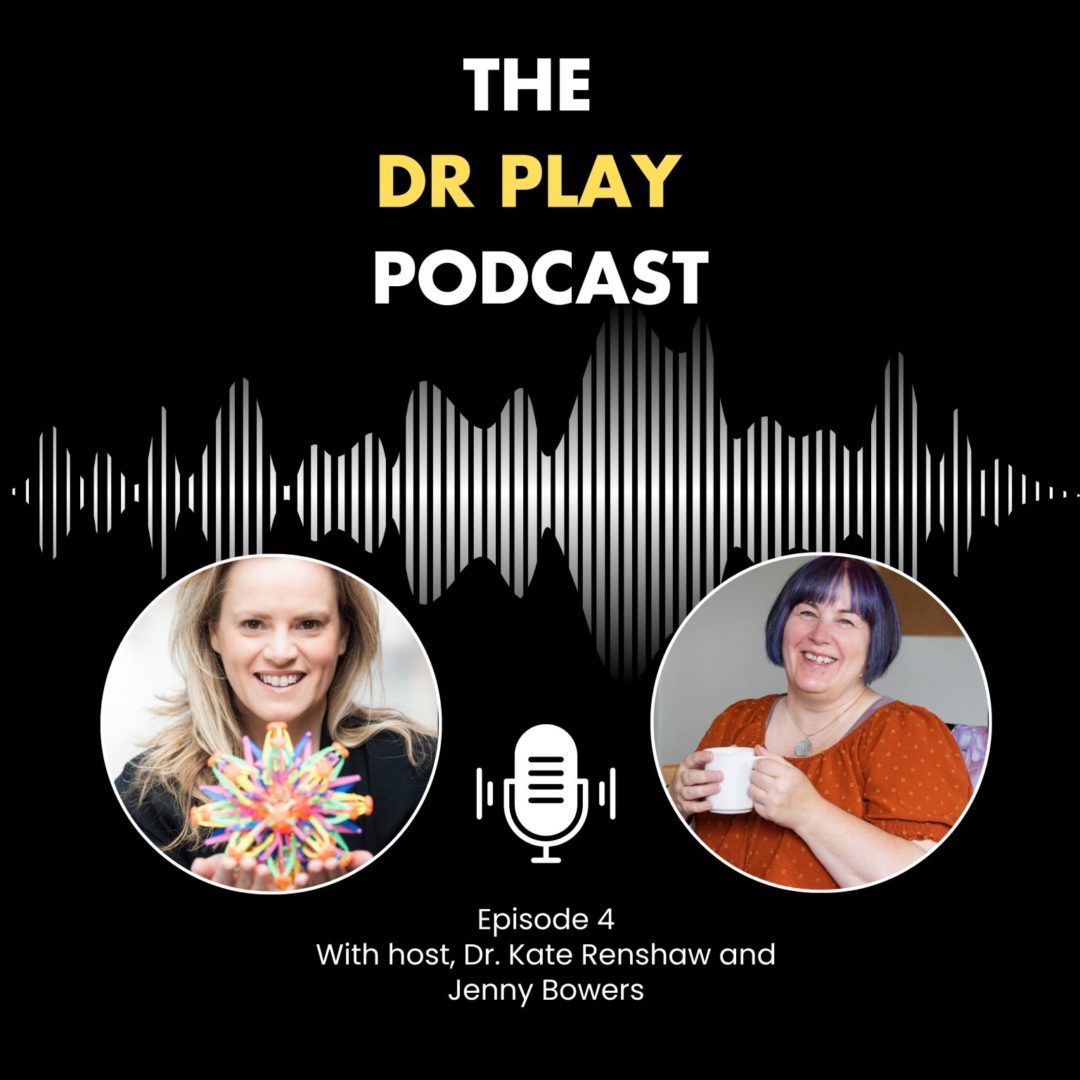
Dr Kate Renshaw, a font of many amazing things,(Play and Filial Therapy) she is also Dr Play on the podcast series: Dr Play Podcast

If you are interested in the Supervision in Education conference, and the launch of the Framework: SiE Conference

If you are a supervisor with a background in education, or an advocate of educator supervisors in education, please join us at CoPSiEbE

Purplemoon Monthly Musings -June-Playfulness Matters

Purplemoon Monthly Musing

Posted 26th June 2025

Reflecting on Reflective Practise- a Purplemoon Monthly Musing

Welcome to Purplemoon Monthly Musings.

On the final Wednesday of every month Jenny will be posting out about a theme that has been appearing in her work, or her life, across all sectors. It could be a topic that particularly resonates with you, or it might be a new concept or idea to you. Either way the aim is to give voice to some thoughts, ponder some questions and explore what this might mean to us as individuals and as a community. Jenny will always aim to credit original sources as she explores the musings title and will welcome your comments and contributions to keep the musing going! This blog is also published on LinkedIn. Follow Jenny here.

Playfulness Matters! As done Connection and Collaboration

This month, the musing is published whilst Jenny is on annual leave. (The power of scheduling!)

So, this month, the musing directs you to something that was published since the last musing, a podcast and a sub stack created by Dr Kate Renshaw. In it, we discuss how an innovative piece of work we did together in South Yorkshire altered the course of both of our careers, and how playfulness matters both for children, for adults, and in the supervision space. 

To get to the podcast please click on the image, and for the substack, please click here!

Enjoy

Effective Supervision Checklist

Effective Supervision Checklist

Posted on April 14, 2021

But what is it you do?

But what is it you do?

Posted on March 3, 2021

What do I do? Here is a video explaining what I do.