Purplemoon Monthly Musings – November-Getting to the heart of it, Part Two-Congruence yes, Collusion no

Purplemoon Monthly Musing

Posted 26th November 2025

Getting to the Heart of It-Part 2- Congruence Yes, Collusion No.- a Purplemoon Monthly Musing

Welcome to Purplemoon Monthly Musings.

On the final Wednesday of every month Jenny will be posting out about a theme that has been appearing in her work, or her life, across all sectors. It could be a topic that particularly resonates with you, or it might be a new concept or idea to you. Either way the aim is to give voice to some thoughts, ponder some questions and explore what this might mean to us as individuals and as a community. Jenny will always aim to credit original sources as she explores the musings title and will welcome your comments and contributions to keep the musing going! This blog is also published on LinkedIn. Follow Jenny here.

Welcome to part two of the ‘Getting to the heart of it’ trilogy. Some of you may have noticed that the purplemoon monthly musing inadvertently took a break in October! It wasn’t intentional, it is that I found part two tricky to coalesce.

This is because congruence is difficult at times,  and collusion can really turn up unintentionally when you are deeply relational and humanistic in your supervision, and creating psychological safety is of paramount importance.


What I do know is supervision is one of the most powerful spaces in leadership. It’s where we pause, reflect, and recalibrate. For education leaders, it’s a lifeline, a chance to process complexity and find clarity. To explore and reflect on self as well as others. For supervisors, it’s a responsibility, a commitment to hold space that is safe, honest, growth-oriented with a wellbeing lens. But within this dynamic, a subtle tension often arises: the pull between congruence and collusion.

Congruence is about alignment. It’s when our values, words, and actions harmonise. In supervision, congruence means showing up authentically—whether you’re the one offering guidance or the one receiving it. It’s about integrity: saying what you mean, meaning what you say, and acting in ways that reflect your principles. Congruence builds trust and therefore a psychologically safe space. It creates a foundation where real learning and wellbeing can flourish.

Collusion, on the other hand, is the quiet compromise. It’s the nod of agreement when your gut says, This needs exploring. It’s the temptation to avoid discomfort for the sake of harmony. Collusion can feel like kindness, but it’s not. It’s avoidance dressed up as empathy. And while it may soothe in the short term, it erodes growth in the long term.


So how does this show up in supervision?

For supervisors, the risk of collusion often comes when a supervisee shares something that feels ethically grey or professionally concerning. You might think, I don’t want to damage trust, and choose silence. But trust isn’t built on avoidance—it’s built on honesty delivered with care. Congruence means naming what you notice: I hear your perspective, and I wonder if we can explore the implications together. It’s not about confrontation; it’s about curiosity and courage.

For education leaders, collusion can look like self-protection. You might hold back in supervision because admitting uncertainty feels risky. You might agree with suggestions, ideas or comments you don’t believe in because challenging feels uncomfortable. But supervision is not a performance—it’s a partnership. Congruence means bringing your whole self into the conversation: your doubts, your questions, your convictions. It’s about trusting that growth comes through honesty, not through pretending.

Here’s the truth: congruence is hard. It asks us to be clear about our values and brave enough to live them out. It asks supervisors to balance support with challenge, and supervisees to embrace vulnerability without fear. But when both sides commit to congruence, supervision becomes transformative.

What does this look like in practice?

  • For supervisors:
    • Hold boundaries with compassion. Empathise without excusing.
    • Name what you notice. Sometimes the most supportive act is surfacing what’s unsaid: I sense some tension—shall we explore that?
    • Stay anchored in purpose. Supervision is not about pleasing; it’s about partnering for growth.
  • For supervisees:
    • Bring your authentic self. Share the wins and the worries.
    • Ask for challenge as well as support. Growth rarely happens in comfort zones.
    • Reflect on alignment. Where do your actions match your values—and where do they drift?

Both roles require courage and compassion. Courage to speak truth, even when silence feels safer. Compassion to hold differences without judgement. When these qualities meet, supervision becomes a space of integrity—a place where leaders are not just managed but mentored, not just supported but strengthened.

So here’s the invitation for this month:

  • If you supervise, notice where collusion tempts you. Where do you soften truths or avoid challenge? What would congruence look like instead?
  • If you are supervised, notice where you hold back. Where do you agree for ease rather than honesty? What would it mean to show up whole?

Because getting to the heart of it is not about perfection. It’s about presence—anchored, authentic, and willing to walk the harder path for the sake of growth. Congruence calls us to alignment, even when it’s uncomfortable. Collusion tempts us with ease, but it costs us trust—and ultimately, wellbeing.

Supervision done well is a courageous conversation. Let’s make it count.

Purplemoon Monthly Musings – September-Getting to the heart of it, part one-Empathy

Purplemoon Monthly Musing

Posted 23rd September 2025

Getting to the Heart of It-Part 1- Empathy - a Purplemoon Monthly Musing

Welcome to Purplemoon Monthly Musings.

On the final Wednesday of every month Jenny will be posting out about a theme that has been appearing in her work, or her life, across all sectors. It could be a topic that particularly resonates with you, or it might be a new concept or idea to you. Either way the aim is to give voice to some thoughts, ponder some questions and explore what this might mean to us as individuals and as a community. Jenny will always aim to credit original sources as she explores the musings title and will welcome your comments and contributions to keep the musing going! This blog is also published on LinkedIn. Follow Jenny here.

At the start of the academic year I have had the opportunity to sit in reflection around the heart of my supervision practice, and consider the messages that need to go out about Professional Supervision/reflective supervision. This time has also allowed me to consider what I want my workshop at the Supervision in Education conference on 1st October to contain at its heart, and to ensure that the messages that are carried out into the sector by my audience are the same as the ones I want carried! 

Yes, on the surface, this musing is for those in the education sector, but in my work I come across so many people in ‘the helping professions’ and those who are conscious of their work and its potential impact on others in many fields, such as marketing and finance. So whatever your background, if you believe in a ‘human first’ approach stick with me here!

I grapple with the concept of empathy, and if you know me, this might surprise you, as I am very open about being relational. What I have learnt from all my years in my roles in the education sector is that I don’t want to ‘walk in your shoes’, and quite frankly how could I? They are uniquely yours after all, and I have my own shoes to manage! 

From a young age I was told I was empathetic, and I wore it as a badge of honour in my early years of safeguarding and SEND. I wanted to know what it was to be the other person so that I could understand, whilst also advising and supporting and, FIXING, because surely if I was empathetic, and I understood it, then I could find the ways to solve it, and then the person could go and do it. Right? Wrong!

This was exhausting, and crucially unsuccessful on many occasions. It can also be part of the route to burnout, vicarious traumatisation or compassion stress injury. Although, I did quickly realise that I couldn’t actually solve anything, but what I could do is give them the tools that I believed would help and explain their use. What I learned through all of this was the value of being willing to truly listen, to approach others with curiosity rather than judgment, and to accept that people’s different experiences shaped their actions and behaviours. I also learned about my privileges and how they had shaped my thoughts and behaviours.

Finally I believed I understood what it was to be relational, and how that made me good at my job. Around this time I also met Dr Kate Renshaw, and she introduced me to congruence and UPR. (Congruence will be delved into next month!)

UPR (Unconditional Positive Regard) was a revelation to me. Finally having a name for how I was trying to hold space when I was with staff, parents and children. It is being able to demonstrate that ‘I don’t want to walk a mile in your shoes, but I do want to know how you are finding walking in them. I do want to listen to how those shoes sculpt the decisions you make and I understand that those shoes are part of why you are doing what you are doing, even if you a repeating a pattern of behaviour that can ultimately damage you’ Don’t get me wrong, UPR can be exhausting too, but what understanding UPR gave me was a filter, a protective layer over myself. How I saw it and used it was to recognise that I don’t have to work at denying my own lived experiences and privileges so I can be in your shoes, to be creating psychological safety for you and co-produce different outcomes with you. What I do need to do is sit here, listen and appreciate the experiences you bring, so that you can explore them safely. Then sometimes I might bring another lens for us both to look through and think about. This space is about you knowing your agency and self efficacy, and knowing where you can go and what you can utilise. It is not me giving solutions that work for others and fixing.

So whilst I continue to grapple with what empathy is, and how I manage my empathetic self (you may be wondering how much it really matters what I name it)  I offer you the video of Brene Brown explaining empathy, as I do think that this is the explanation that sits most comfortably with me: YouTube Brene Brown Empathy Big thanks to Lisa Nel and Mark Stancombe who shared this as part of their informative and excellent Vicarious Traumatisation workshop I was a participant in. 

So what does this meandering through my thoughts on empathy have to do with the heart of professional supervision, and the messages that I believe need to be out there?

  • The space needs to psychologically safe for both the supervisor and the supervisee
  • It is not a space where an expert is there to fix things
  • Supervisors need to attend to their own mental and emotional health
  • Supervisors need to have experienced supervision and received training on supervision, no matter their background
  • Not all supervisors are the same, so they need to articulate their style and methodology so the supervisee has clarity

As I continue my musing next month, bringing congruence (but not collusion) into the mix, please let me know your thoughts on empathy, and how you utilise it (or not).

If you want to know more about Vicarious Traumatisation, Lisa and Mark are amazing: Vicarious-Traumatisation

If you want to know more about Compassion stress injury in the education sector, Dr Rachel Briggs has amazing wisdom in this area: ReflectedandBalanced

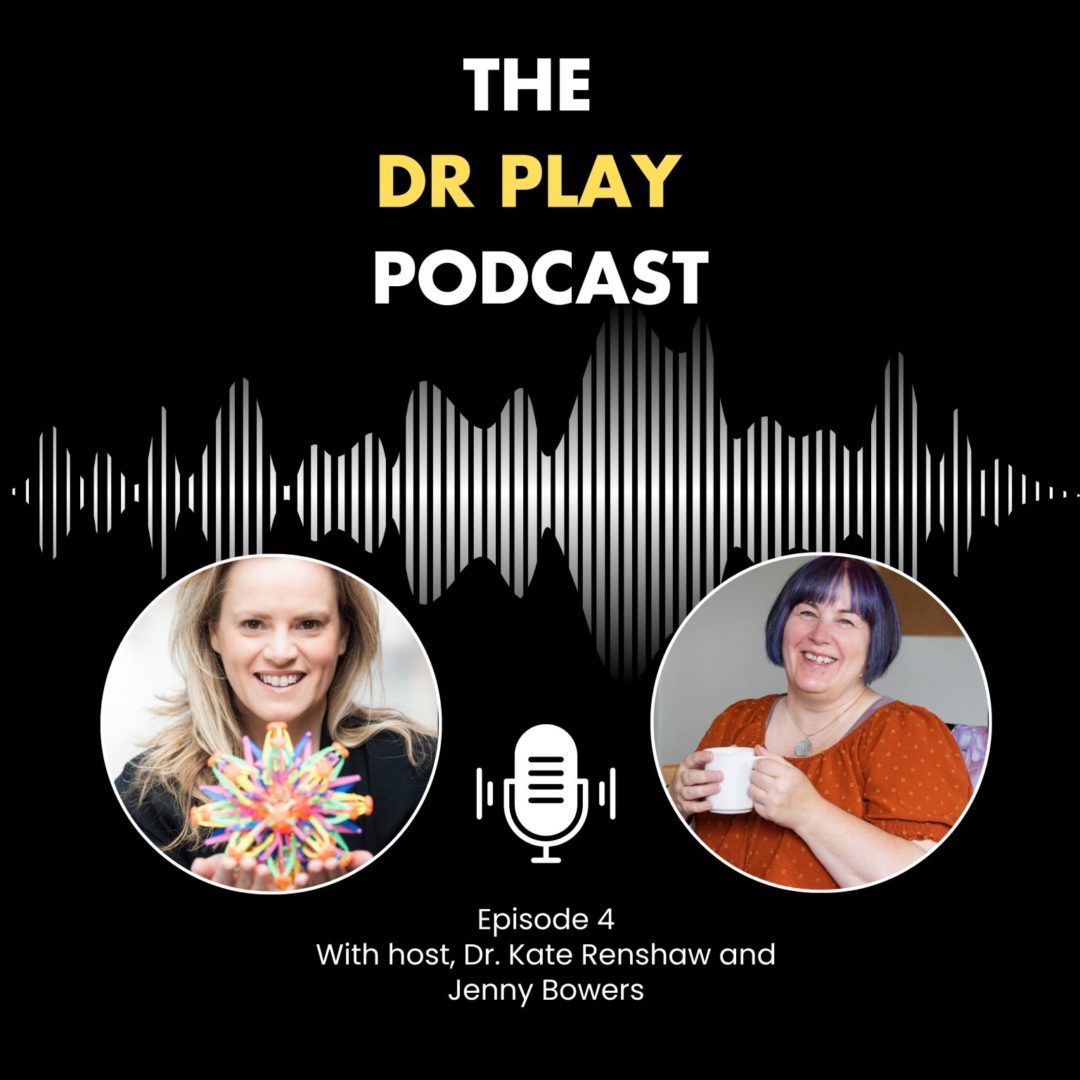
Dr Kate Renshaw, a font of many amazing things,(Play and Filial Therapy) she is also Dr Play on the podcast series: Dr Play Podcast

If you are interested in the Supervision in Education conference, and the launch of the Framework: SiE Conference

If you are a supervisor with a background in education, or an advocate of educator supervisors in education, please join us at CoPSiEbE

Purplemoon Monthly Musings -June-Playfulness Matters

Purplemoon Monthly Musing

Posted 26th June 2025

Reflecting on Reflective Practise- a Purplemoon Monthly Musing

Welcome to Purplemoon Monthly Musings.

On the final Wednesday of every month Jenny will be posting out about a theme that has been appearing in her work, or her life, across all sectors. It could be a topic that particularly resonates with you, or it might be a new concept or idea to you. Either way the aim is to give voice to some thoughts, ponder some questions and explore what this might mean to us as individuals and as a community. Jenny will always aim to credit original sources as she explores the musings title and will welcome your comments and contributions to keep the musing going! This blog is also published on LinkedIn. Follow Jenny here.

Playfulness Matters! As done Connection and Collaboration

This month, the musing is published whilst Jenny is on annual leave. (The power of scheduling!)

So, this month, the musing directs you to something that was published since the last musing, a podcast and a sub stack created by Dr Kate Renshaw. In it, we discuss how an innovative piece of work we did together in South Yorkshire altered the course of both of our careers, and how playfulness matters both for children, for adults, and in the supervision space. 

To get to the podcast please click on the image, and for the substack, please click here!

Enjoy

What is Listening?

What is Listening?

Posted on March 22, 2021


Listening
I’ve had a few different conversations recently about listening: What the point of listening is and how we do (or don’t!) Listen!
As a daughter, sister, partner, friend, teacher and leader I have said ‘you are not listening to me!’ or ‘are you listening to me? ‘many times. Often with growing frustration. I’ve had it said to me from my brother, parents, partner, friends, a child, staff line manager and member of staff. There have also been times when I simply haven’t spoken up as I was sure the audience wouldn’t listen to me.
What I have come to realise, through my experience and through pulling together different strands of training over the years, is that there are many different types of listening, and may different ways to respond to someone when you have listened to them. I’m also really interested when people talk about ‘the listening ear’ and ‘active listening’- again there are quite a few facets to both of these descriptors.
What I do know is that when I am participating in a discussion as a coach or as a supervisor I have an intensive focus on me listening effectively and draw on my experience of listening and being listened to.
So here are my thoughts;

Listening to respond

This is where you may end up in a disagreement or misunderstanding if the emotions behind it are powerful and beginning to overwhelm.

However, there is a place for this, as there are times when it is a question or query that is being said.

Listening to understandThis is a big part of coaching and supervision and effective leadership. Yes, you will still be responding, but it is about ensuring that you are truly hearing what is being said to you, through words and through non-verbal cues so that your response is measured, calm and worthwhile
Listening to empathise and/or sympathiseWe have all had those moments when someone just wants to vent, or share something, good or bad. Here what they want is acknowledgement and validation.
Listen to give advice/solutionsThis is mentoring or when you are seen as the expert. Someone wants or needs you to give them a solution, or want you to advise what you would do in their position. Be warned, be sure that this IS what they want, or you may end up with frustration!
Listen to ensure the person has understood you and what you have saidThis became increasingly important for me when launching initiatives or trying to shift culture. I had had a discussion, I thought what I said was clear and obvious, but then I would ask a key question, or ‘check for feedback’ and what they would say was something different, So do this listening at key points so that you are making sure they have really grasped the main points that you wanted them to, and they understand them.
Listening to see who has the biggest voice and who is not engaging or being drowned outI am often fascinated by team dynamics, and will often sit back, watch and listen to a group discussion. Who is leading, who is engaging what listening styles, who is being silent and disengaging, who looks animated and who looks confused? And is there a way to rebalance or check in?
Listening to see who has the same values, ethics and ideals as us and who doesn’t.We often seek allies and gravitate to those that seem similar to ourselves. Particularly in friendships, in employment and we desire it in family. Having that internal debate to decide shall I engage in this discussion in the pub, around coffee stand at the conference, in the staff room can sometimes lead us to decide no, and this is ok!

What I do know is that sometimes listening is an effort, particularly when stressed or tired or desperately trying to get something done to a deadline! I also know it is ok to say ‘I cant listen just now, but lets talk in the morning, in an hour or let me grab a coffee first.’ All listening types require dialogue, and acknowledging that you can’t listen right now is better than half listening!

Is venting good for you?

Is venting good for you?

Posted on January 18, 2021


Venting, good for the soul? A nice way to release anger and frustration? The satisfaction in the moment; getting what is in your head out into the world and letting someone else have a share in your feelings sounds good doesn’t it? But is it actually good for your long term wellbeing or is this a negative selfcare tool?

There was a point in my career when I would have been very much on the side of venting as a good thing. The job would be weighing heavily on me and something would just be tipping me over the edge. I’ be on a call to my dad and after the general niceties he’d ask me an innocuous question; ‘how’s work this week?’ Or maybe a not so innocuous one; ‘did you see X in the newspaper?’ and away I’d go. He would listen, empathise, sympathise and quite often get angry and frustrated on my behalf. Sometimes he would make me more frustrated as I had to explain something to him as an segue as he isn’t ‘in the field of education’. I’d then run out of steam and talk to my mum about something totally innocuous (a bird in the garden or something the neighbour had done) and I would laugh and move on. And I would be feeling better(?)

Sometimes it would be a teacher friend I would be venting to (and it might become a joint vent on the same subject, both adding the fuel to a raging burn) and then we’d realise we were on the tram, or in the pub and maybe this wasn’t a ‘safe space’ to be having this vent. Or it would be a teacher friend at a different establishment where we would end up almost in competition over who had it worse. Urgh.

Later it also became my super other half (not in the education sector at all) and he would get it full barrels at times, and just look at me with sympathy then go and get us both a beer and try and help me make sense of what I had just said. I am not sure he signed up to that at all when we moved in together!

I then started being coached and coaching ‘properly’. I think I came to it ‘late’ and we had been doing a kind of ad hoc muddle of coaching over the years from reading about it and the odd seminar. But, for me, finally attending some meaningful training (Thank you Paul Simmons at Independent Coaching and Oldham LA who provided this free to new heads) really made me realise how dangerous venting is:

  1. Was I venting in a safe space?
  2. was the person on the receiving end able to deal with the venting in a good way and were they emotionally equipped to deal with it?
  3. (Crucially) was it actually making me feel better longer term?

At this point I also went back to a very good friend who is an outstanding play therapist. She worked in my school leading filial play therapy and, (as she now lives in Australia) I sent her a message along the lines of ‘Remember when you were muttering about me needing Supervision and you were trying to get me to sit down and talk and I didn’t really get it? Well I do now!’ But still, supervision isn’t on the general radar of education folk. Coaching definitely is, and coaching will definitely reduce the need for the venting. So, why is supervision better (and safer) than venting?

  1. There is a safe space created where there is just you and the supervisor.
  2. The supervisor has no emotional attachment to the situation (especially when they are external to your organisation) or, if they are a line manager who has received supervision training, they know how to deal with their own emotional attachment to it.
  3. The supervisor will be equipped and ready to deal with, and address the need of, the supervisee. It is a planned and structured event.
  4. If the supervisor believes that medical intervention or specialist therapy is needed then they will advise the supervisee to seek this out (and if necessary stop the session so that this can occur).
  5. The issue/case/situation that is being discussed will be examined, addressed, thought about and some steps to move it on will be decided by the supervisee.
  6. If the supervisee is bringing the same issue/case/situation to sessions, then the underlying issue regarding this will be addressed.
  7. Supervision will have a long-term positive effect on your wellbeing and job satisfaction

Is venting good for your soul? When it comes to work I would argue no, not in the long term, and it can be dangerous in the short term depending what space it is done in and who with. Supervision and coaching are far better tools to have (and, I believe, they should be part and parcel of your wellbeing offer at work). However, don’t get me started on the current preferred playing style (that means they win) of the England rugby team…

How I got to here

How I got to here

Posted on January 2, 2021

I knew I would be working in education, probably as a teacher, from the age of 3 after starting nursery. (My dad oft tells of his visit to pick me up as a surprise and the teacher asked him not to go in yet as I was ‘reading’ to a group of friends on the carpet with the staff quietly tidying up around me!)

This ambition stayed with me all the way through my primary and secondary school life, and whilst completing my A Levels I was often found as a volunteer in the EYFS/Y1 classes of the local primary school. However, I did not want to complete a BEd and go straight from school to university to school (as a teacher). Instead I opted for a four year BA(Hons) in American Studies, completing my third year in a university in upstate New York. (what an amazing experience that I still cherish).  Then on competition of this degree I took a year ‘off’ from education, instead working in a range of settings to ensure that teaching really was where I wanted to be (it was!). I then completed my PGCE at the University of Hertfordshire, with a specialism in EYFS so that my qualification covers 3 year olds to 11 year olds.

I was now a teacher, and loving it! I spent three years in a two form entry primary school with a nursery in Bishops Stortford and then decided to leave ‘the south’ and go to wonderful Yorkshire, landing in Sheffield. After a term of supply teaching I started a very fruitful and enjoyable stint in a two form entry primary with nursery on the outskirts of the city. Here I discovered that although I love being in the classroom, I wanted to do more for the children and my colleagues. I became the safeguarding Lead (then called the Child Protection Lead Teacher) and a year later became the SENDCo. I loved the collaboration, the learning, the achievements and the sheer unexpectedness of what these dual roles brought into my life. However, I did not enjoy the stress, the frustrations, the anxiety of the wait for support for children, or sharing the strain of the struggles of the families and the sheer weight of paperwork.

I then took all of this experience and in 2011 became a deputy head for a school in a deprived area of Barnsley. This was a ‘non-teaching’ role and I remained the lead for safeguarding, SEND and disadvantaged children. I thought that I would find fully stepping out of the classroom hard, but instead I discovered that supporting families and developing and supporting the teachers and support staff within the school incredibly rewarding. I continued to collaborate in new ways, with play therapists, other leaders, other agencies and also had the opportunity to sit on the safeguarding board that was formed in Barnsley after a disappointing LA Ofsted inspection.

In 2014 I relocated to West Yorkshire, and became the non-teaching Deputy Head of a school in Oldham. Again, I was the lead for safeguarding, SEND, disadvantaged children and I also line-managed the support staff, creating a performance management cycle for them that mirrored the teachers and enabled them to share their strengths and to support the development of their areas of need.

I became actively involved in the SEND hub, the local collab of leaders, and the Behaviour and Attendance Hub within the local authority. In these Hubs and collabs I was involved in creating model policies, guidance and toolkits for staff in primary schools. I worked with colleagues from other schools and agencies and regularly discussed the need for coaching and supervision within educational settings to support the wellbeing of staff, to increase retention and ensure that staff were being fully supported to be the best they could be in the classroom.

In 2017 I became the head of the school. I set about revitalising the curriculum, embedding coaching through my performance management methods and trying to ensure that the school was a happy and healthy place for the children, staff and community.

This year (2020) I made the decision to leave my role as headteacher and I want to continue my journey to change the culture within education to ensure that all staff have a safe and healthy place to work, that they are valued, celebrated and supported and that the process of supervision, which is common in health and social care, becomes a cornerstone of practice for education settings.  Coaching and supervision has a direct positive impact on wellbeing, retention, absence management and classroom practice and I truly love delivering it!